Casino in Ottawa
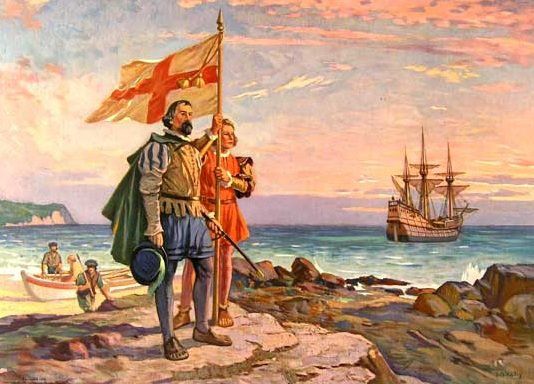
John Cabot and his crew probably thought they were introducing gambling to the new world when they landed on Canada’s East coast in 1497. To their surprise, they were hundreds of years too late. Canada’s Indigenous tribes had already played gambling games such as ‘Shilal’ for well over 1,000 years. If Cabot really wanted to see what gambling was all about, he should have waited another 500 years and ventured further inland.
He and his men would have been in awe when they came across the casino near Ottawa and the other ones in the region.
Best Casinos in Ottawa
You have to travel around the nation’s capital to soak in all the culture, history, and breathtaking scenery. Yet, you need only visit one venue to experience the best dining, world-class entertainment, and Ottawa’s vibrant nightlife. You’ll find all of that at the Best Casino in Ottawa.
Rideau Carleton Casino in Ottawa
The Rideau Carleton Raceway became the region’s only horse racing track when it opened way back in 1962. As the demand for an Ottawa casino grew, the raceway added table games and slot machines in 2000. In 2017, Hard Rock International assumed the Ottawa casino’s day-to-day operations. The venue will soon reopen with a new name and a new modern look. Hard Rock Ottawa’s expansion plans include:
- Four new restaurants
- Rock Shop
- More slots and table games
- A 2,500-seat Hard Rock Live theatre
- A 200-room hotel
- More Parking
- Four new lounges
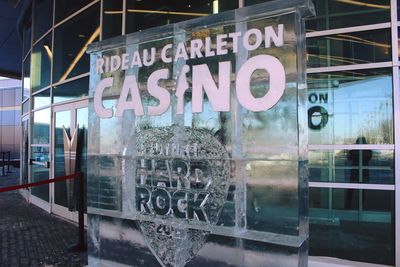
Even though Rideau Carlton Casino is being renovated, it is still open to the public. Visitors can enjoy all the facility has to offer. Casino games, dining, entertainment, and other amenities are just the beginning. The casino floor boasts over 1,200 slots, casino table games, and a full slate of live harness racing. Anyone needing to satisfy their hunger can get their fill at:
- The Clubhouse
- Caffé Italiano
- YOUYU Noodle Bar
- Constant Grind
- The Rendezvous Lounge
The refurbished site will reopen under its new name when Hard Rock Ottawa completes the renovations in 2023. It will be business as usual until then.
Casino du Lac-Leamy in Gatineau Near Ottawa
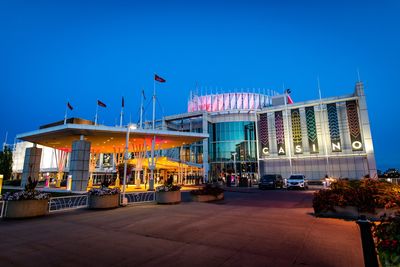
Formerly named the Casino de Hull, Casino du Lac-Leamy is nestled in scenic Gatineau on the Quebec side of the Ottawa River. This casino near Ottawa lets guests to soak in both the English and Quebecois cultures. The casino features over 1,700 slots and video poker games. There are plenty of live table games including Baccarat, Blackjack, Roulette, and a variety of casino poker games. You’ll also find Keno, War, Craps, Sic Bo, and the ever-popular Wheel of Fortune at Casino Lac-Leamy.
Beginners and those who like to take it slow will love The Zone. This section features interactive games in a festive and up-tempo atmosphere. If you’ve worked up an appetite, Casino Lac-Leamy has some tasty dining options including:
- Le Baccara
- Arome
- Banco Bistro
- Le Café
- TGV
Visitors to Casino du Lac-Leamy can also relax and enjoy a cocktail at:
- Bar 7
- Bacchus
- Bar Poker
Take in a live show at Théâtre du Casino. Then take advantage of bottle service and dance the night away to the sounds of special guest DJs at Aléa.
Of course, Casino du Lac-Leamy isn’t just for gamblers and thrill seekers. It is a perfect destination for anyone looking for a relaxing getaway. You can book a room at the luxurious Hilton Lac-Leamy. Lounge by the pool, take in a spa treatment, play some tennis, or get in a workout at the gym. If you want to play a few casino games without leaving your comfortable surroundings, you can always play at Casino du Lac-Leamy’s online casino. You can even earn yourself some free spins when you sign up.
Where Else Can You Find a Casino Nearby?
Casino du Lac-Leamy isn’t the only casino near Ottawa. There are several other world-class casinos located throughout Quebec and Ontario.
Shorelines Casino Thousand Islands, Gananoque
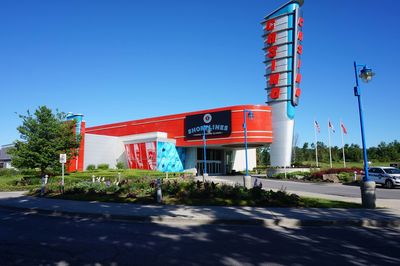
Shorelines Casino Thousand Islands has everything you’d expect from a world-class casino. On top of a huge selection of slots and video poker, this casino near Ottawa features casino staples such as Blackjack, Roulette, and Baccarat. Shorelines Casino Thousand Islands has a great selection of casino poker games including:
- High Card Flush
- 3-Card Stud
- Casino Hold ‘Em
- Mississippi Stud
- Let It Ride
Casino de Montreal
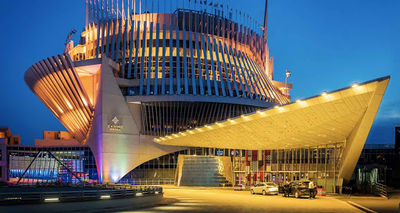
It might be about 120 miles from Ottawa, but a trip to Casino de Montreal is well worth the trip. Casino de Montreal offers several wonderful dining options, plenty of entertainment, and that world-famous Montreal nightlife. This casino near Ottawa features a gaming floor with an abundance of slots, video poker, and virtual sports. There is also a plethora of casino table games such as:
- Three Card Poker
- Pai Gow Poker
- Ultimate Texas Hold ‘Em
- Caribbean Stud
- Let It Ride Bonus
- Sic Bo
- Craps
If You Don’t Want to Go Anywhere, Is There an Alternative?
There is definitely an alternative today. Thanks to modern technology, in the last years, online gambling has had a huge growth! More and more players access the various games to play for free or for real money with bonuses on straightforward terms. The casinos are getting better by upgrading their software and improving their various offers. They offer you services of the best quality for multiple devices (phone, tablet or computer).So, if you don’t have enough time to go somewhere to play in a casino, you can get the gaming experience at home. It is not necessary to leave it. You can gamble at a casino online Canada from your devices at any time of the day or night and benefit from offers.

It is very important to know that most of them are regulated by organizations of control – Malta Gaming Authority, Kahnawake Gaming Commission, Curaçao Gaming Control Board. They evaluate casinos carefully to give a valid certificate to those who have reached a certain standard of fair gaming.
What about Hard Rock Ottawa?
Hard Rock International is currently renovating the existing Rideau Carlton Casino in Ottawa. The Rideau Carlton Casino will remain open and fully operational during the Hard Rock Ottawa’s construction. The renovations should over with in 2023.

Are there Problems with Gambling in Ottawa?
There is potential for problems wherever gambling exists. The Ottawa Gambling Harm Prevention Network is just one part of a multi-faceted plan to raise awareness of the potential problems that may arise from gambling. The OGHPN has partnered with several stakeholders to help people develop and maintain a healthy attitude towards gambling. It continues to develop plans to address problem gambling in Ottawa.
Recent Posts
- How to Play Monopoly Live?
 Monopoly Live is exactly what the name promises: a live version of Monopoly. This game show is a mix between the classic board game, a wheel of fortune and a digital version of Mister Monopoly (officially
 - The explosive new slot of Play'n Go | Miner Donkey Trouble
 After the thunderous release of Coils of Cash ™ in early 2021, Play'n Go reiterates with an equally fun novelty, although a little different, and surprises us with an explosive slot: Miner Donkey Trouble ™ released
 - A look back at the life of Sheldon Adelson, casino mogul & kingmaker
 A self-made man like America loves them Born into a family of Ukrainian Jewish descent, Sheldon Adelson grew up in a modest environment in the suburbs of Boston. His father is a taxi driver, and little